See below, definition 2a, for the state of this blog while I focus on my day job. That didn't take long, did it?
The etymology is also perfect: "to yawn." But also see definition 1b — a gap in my anatomy?! Stop staring at my hiatus!
hiatus
Main Entry:
hi-a-tus
Pronunciation:
\hī-ˈā-təs\
Function:
noun
Etymology:
Latin, from hiare to yawn — more at yawn
Date:
1563
1 a: a break in or as if in a material object : gap
b: a gap or passage in an anatomical part or organ
2 a: an interruption in time or continuity : break ; especially : a period when something (as a program or activity) is suspended or interrupted (after a 5-year hiatus from writing)
b: the occurrence of two vowel sounds without pause or intervening consonantal sound
Source: http://www.merriam-webster.com/dictionary/hiatus


winger and hathaway getting dysfunctional
Last weekend, Netflix brought me what I thought was a gift: Rachel Getting Married. I'd been kicking myself for not catching it in the theater, because it sounded like my kind of movie. Anne Hathaway (gone to the dark side, which is even better), Rosemarie DeWitt, Debra Winger, and an indie feel — what's not to love?
A lot, as it turns out. The movie is a mess. I'll gladly echo all the praise for Anne Hathaway, and I hope she has a long career full of complex, slightly dark roles. But the film itself is a blob of family dysfunction that slowly overtook my psyche and made me want to hide in a closet.
Admittedly, I'm not exactly drawn to anything related to the phrase "getting married." I'm not a fan of weddings — partly because I'm still excluded from that particular rite of passage, but mostly because I don't like forced family get-togethers generally. And having wallflower tendencies, I simply can't relate to the whole "Hey, look at me and celebrate my love by ogling my clothes and watching my beloved shove cake into my mouth!" thing. Nor am I gung-ho about marriage generally (the concept, with or without the wedding). So maybe I should have expected Rachel Getting Married to disappoint and confound me.
But I am generally a fan of movies and TV shows that dissect and expose family dysfunction. They can be cathartic, poetic and very moving. Examples: The Squid and the Whale; The Savages; Secrets and Lies; Six Feet Under; The Shining (ha-ha). They can even be hilarious (see The Royal Tenenbaums and Little Miss Sunshine). I guess I need some sort of cinematic structure to rein in all of that amorphous angst. And Rachel Getting Married is so shapeless, I'm not sure it's really a film. It's more like an extended home video, crossed with a United Colors of Benetton commercial.
So I'll console myself the way I always do: by focusing on the lovely, lovely women in the movie.
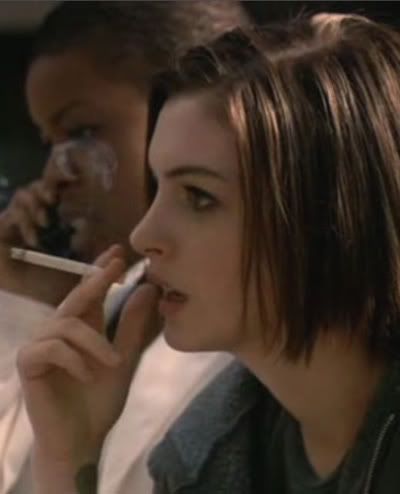
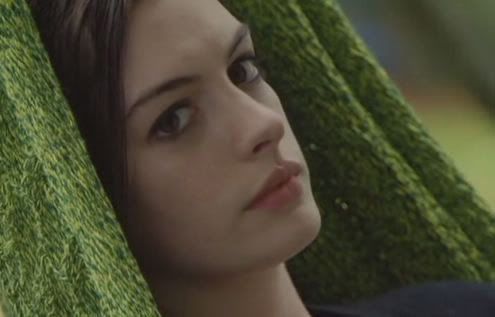
First, of course, Anne Hathaway. She is so rrowrr with the dark hair.
Next, Rosemarie DeWitt, who seems to be well on her way to specializing in "normal person with crazy sister" roles. I like her more and more every week in The United States of Tara, and I liked her in Rachel Getting Married too. Also, I like her nose (and the fact that she hasn't done anything with it). And she has a Feist-y quality. Feist meets Paget Brewster, maybe.
Where did she come from, anyway? She seems to have sprung fully formed from obscurity. Her performance in Rachel eclipses Bill Irwin's, if you ask me — but then, I generally see him as a flurry of tics and grimaces with not much underneath.
Finally, the sublime Debra Winger. When she first appeared on the screen, I gasped. She is aging so very well, and I've missed her.
Winger's part in the film is quite small, but of course she makes the most of it. And (uh, spoiler alert) she gets to give Anne Hathaway a black eye. Woo!
I don't blame Winger a bit for retreating from acting lately, but for selfish reasons, I hope she takes on a few more choice roles before she retires entirely. She has a big, big gift. (I guess that's the gift that Netflix brought me.)
And that reminds me: how yummy was Winger in Eulogy, playing gay and playing the piano? Here's my favorite bit from that one (the "fuck-sing" scene — sorry about the weird crying/coughing at the beginning):
That's Glenne Headly as the fuck-singee, by the way. Lucky girl. (And yes, Famke Janssen and Kelly Preston also play lesbians in the film. And Zooey Deschanel is in it too, but not so gayly.)
Hey, Eulogy is another family dysfunction flick that I like just fine. Maybe my problem really is the wedding thing — I probably would have loved it if it had been Rachel Getting Buried. After all, I do adore Harold and Maude. Sing out!
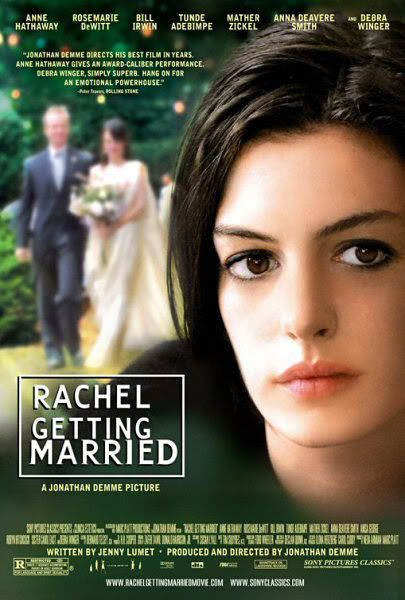
A lot, as it turns out. The movie is a mess. I'll gladly echo all the praise for Anne Hathaway, and I hope she has a long career full of complex, slightly dark roles. But the film itself is a blob of family dysfunction that slowly overtook my psyche and made me want to hide in a closet.
Admittedly, I'm not exactly drawn to anything related to the phrase "getting married." I'm not a fan of weddings — partly because I'm still excluded from that particular rite of passage, but mostly because I don't like forced family get-togethers generally. And having wallflower tendencies, I simply can't relate to the whole "Hey, look at me and celebrate my love by ogling my clothes and watching my beloved shove cake into my mouth!" thing. Nor am I gung-ho about marriage generally (the concept, with or without the wedding). So maybe I should have expected Rachel Getting Married to disappoint and confound me.
But I am generally a fan of movies and TV shows that dissect and expose family dysfunction. They can be cathartic, poetic and very moving. Examples: The Squid and the Whale; The Savages; Secrets and Lies; Six Feet Under; The Shining (ha-ha). They can even be hilarious (see The Royal Tenenbaums and Little Miss Sunshine). I guess I need some sort of cinematic structure to rein in all of that amorphous angst. And Rachel Getting Married is so shapeless, I'm not sure it's really a film. It's more like an extended home video, crossed with a United Colors of Benetton commercial.
So I'll console myself the way I always do: by focusing on the lovely, lovely women in the movie.
First, of course, Anne Hathaway. She is so rrowrr with the dark hair.
Next, Rosemarie DeWitt, who seems to be well on her way to specializing in "normal person with crazy sister" roles. I like her more and more every week in The United States of Tara, and I liked her in Rachel Getting Married too. Also, I like her nose (and the fact that she hasn't done anything with it). And she has a Feist-y quality. Feist meets Paget Brewster, maybe.
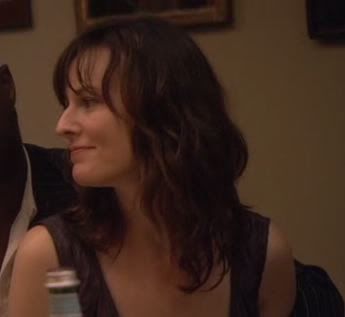

Where did she come from, anyway? She seems to have sprung fully formed from obscurity. Her performance in Rachel eclipses Bill Irwin's, if you ask me — but then, I generally see him as a flurry of tics and grimaces with not much underneath.
Finally, the sublime Debra Winger. When she first appeared on the screen, I gasped. She is aging so very well, and I've missed her.
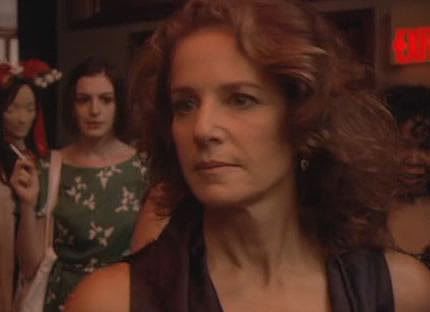
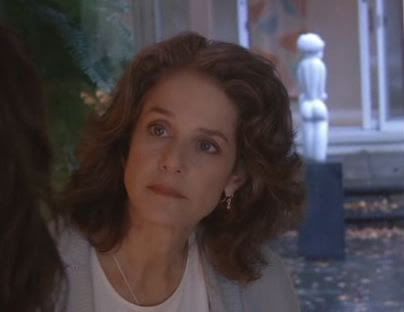
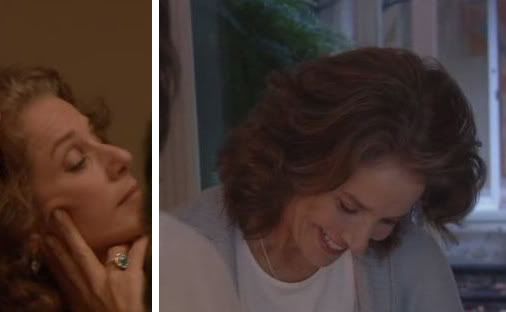
Winger's part in the film is quite small, but of course she makes the most of it. And (uh, spoiler alert) she gets to give Anne Hathaway a black eye. Woo!
I don't blame Winger a bit for retreating from acting lately, but for selfish reasons, I hope she takes on a few more choice roles before she retires entirely. She has a big, big gift. (I guess that's the gift that Netflix brought me.)
And that reminds me: how yummy was Winger in Eulogy, playing gay and playing the piano? Here's my favorite bit from that one (the "fuck-sing" scene — sorry about the weird crying/coughing at the beginning):
That's Glenne Headly as the fuck-singee, by the way. Lucky girl. (And yes, Famke Janssen and Kelly Preston also play lesbians in the film. And Zooey Deschanel is in it too, but not so gayly.)
Hey, Eulogy is another family dysfunction flick that I like just fine. Maybe my problem really is the wedding thing — I probably would have loved it if it had been Rachel Getting Buried. After all, I do adore Harold and Maude. Sing out!
toni toni toni
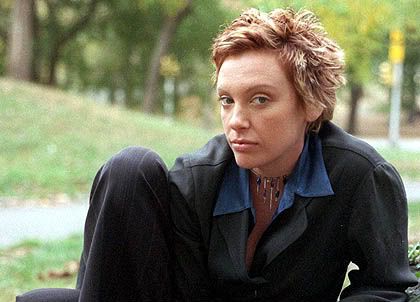
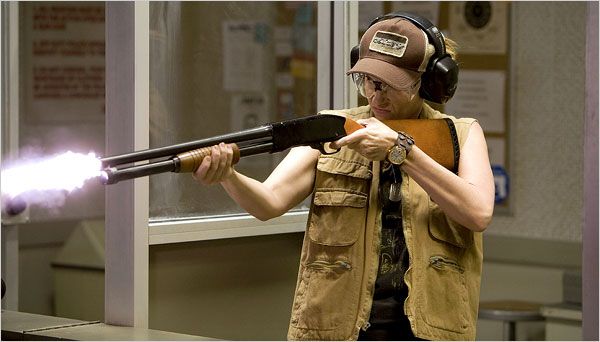
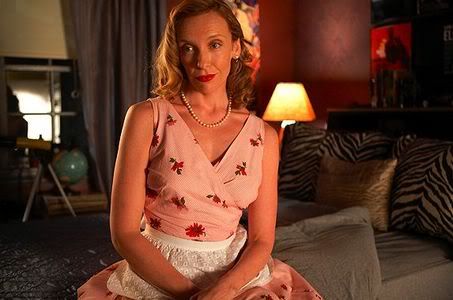
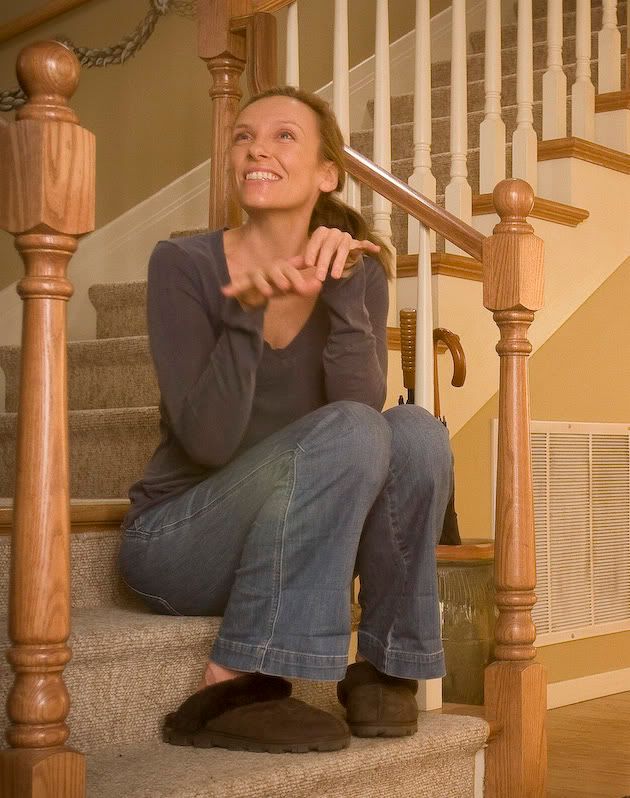
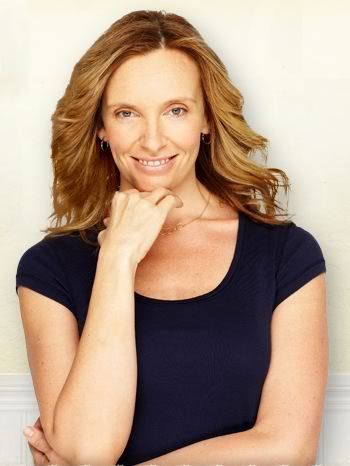
Thanks to The United States of Tara, I start each week with thoughts of Toni Collette. What is it about her? I mean, yeah, I know what it is — she's gifted, she's gorgeous, she's hilarious — but there's something extra going on. Allow me to ponder the evidence for a moment.
Next came Cosi and Emma, and the excellent Clockwatchers and Velvet Goldmine. She was the darling of indie films when "indie" still meant something.
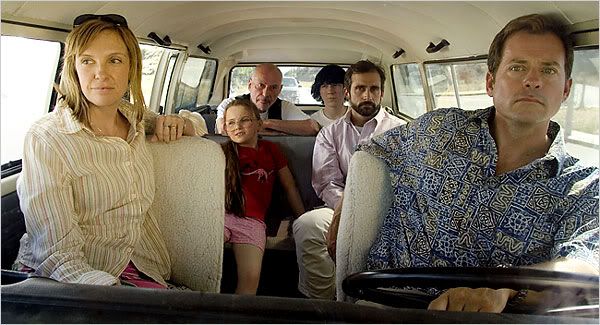
And then she found the perfect amalgam of everything indie and everything big: Little Miss Sunshine.
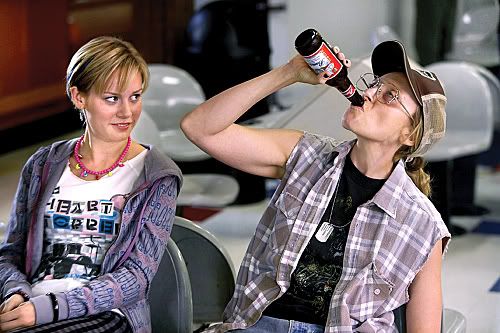
I don't know how she does it week after week — bringing to life not one character but five, one of which (Gimme) is little more than a bundle of primal instincts. And one of which is a man. Yeah, Buck is a redneck and kind of a jerk, but I still find it sexy when Toni gets her swagger on.
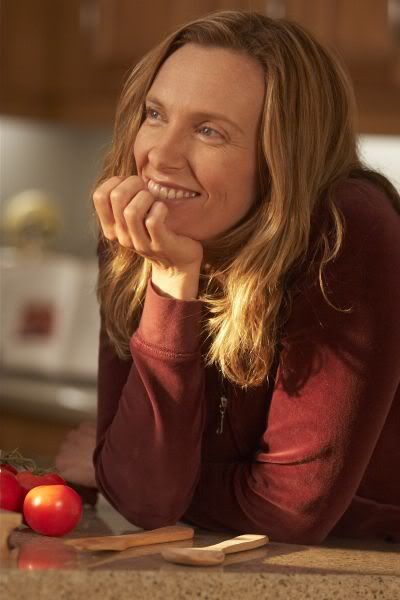
I first saw her in Muriel's Wedding. This movie is one of my faves (laughter, tears, Toni AND the very sexy Rachel Griffiths?! Yes, please!), and it's a perfect example of the way Toni can keep you in stitches while tugging at your heartstrings. And the "Waterloo" scene is a surefire remedy for a bad day.
Next came Cosi and Emma, and the excellent Clockwatchers and Velvet Goldmine. She was the darling of indie films when "indie" still meant something.
And then she found the perfect amalgam of everything indie and everything big: Little Miss Sunshine.
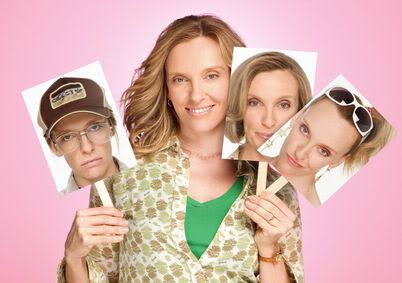
I don't know how she does it week after week — bringing to life not one character but five, one of which (Gimme) is little more than a bundle of primal instincts. And one of which is a man. Yeah, Buck is a redneck and kind of a jerk, but I still find it sexy when Toni gets her swagger on.
Natasha Richardson, 1963-2009
Almost exactly two years ago, I was in the front row for a performance of The Year of Magical Thinking, a one-woman show starring Vanessa Redgrave and capturing Joan Didion's experiences and emotions after the loss of her husband and daughter.

Redgrave was, as always, luminous and intense. She's a true theater actor who connects with the audience directly: by holding individual gazes, by talking to (not over) the faces before her, by inviting you — pleading with you — to feel what she is feeling, not as a spectator but as a witness.
Her eyes landed on mine at one point, and stayed there for several lines of dialogue. I felt a jolt of energy, almost a kind of fright. I lost track of the words she was speaking, but their meaning was indelibly imparted: You think this won't happen to you, you think this will never happen to you, you think you're immune. You're not.

Despite her ability to convey that desperation and pain, Natasha Richardson's mother (which is what she really was on that stage — not Vanessa Redgrave, not Joan Didion, but Joely and Natasha's mum) may herself have thought or hoped she was immune and would never feel the anguish of the loss of a child. And embodying grief on the stage is nothing like getting kicked in the gut by it in real life, real death. But I think she'll be able to draw some strength from being in The Year of Magical Thinking, and from her eye-level connections to the audience. Transforming individual experience into something universal — making us all feel human and connected — is the best of what art can do. Even when the experience is the worst of what life can bring.
I can't know how it feels to be Natasha Richardson's mother or other family member or friend. All I can do is hope that they all know, somehow, that a lot of us in the "audience" are feeling the pain too. It's smaller and shallower, but it's akin: it's the loss of a part of all of us. Natasha added so much to what Meryl Streep recently called the "aggregate human attempt," and losing her (in the aggregate, in the abstract, at every level) just hurts.

I guess I'm feeling that thing people try to express with the phrase "our hearts go out to you." At least, something's gone out of my heart today.
Thank you, Natasha, for bringing your unique art and magic to the stage and screen. We miss you already.


Redgrave was, as always, luminous and intense. She's a true theater actor who connects with the audience directly: by holding individual gazes, by talking to (not over) the faces before her, by inviting you — pleading with you — to feel what she is feeling, not as a spectator but as a witness.
Her eyes landed on mine at one point, and stayed there for several lines of dialogue. I felt a jolt of energy, almost a kind of fright. I lost track of the words she was speaking, but their meaning was indelibly imparted: You think this won't happen to you, you think this will never happen to you, you think you're immune. You're not.

Despite her ability to convey that desperation and pain, Natasha Richardson's mother (which is what she really was on that stage — not Vanessa Redgrave, not Joan Didion, but Joely and Natasha's mum) may herself have thought or hoped she was immune and would never feel the anguish of the loss of a child. And embodying grief on the stage is nothing like getting kicked in the gut by it in real life, real death. But I think she'll be able to draw some strength from being in The Year of Magical Thinking, and from her eye-level connections to the audience. Transforming individual experience into something universal — making us all feel human and connected — is the best of what art can do. Even when the experience is the worst of what life can bring.
I can't know how it feels to be Natasha Richardson's mother or other family member or friend. All I can do is hope that they all know, somehow, that a lot of us in the "audience" are feeling the pain too. It's smaller and shallower, but it's akin: it's the loss of a part of all of us. Natasha added so much to what Meryl Streep recently called the "aggregate human attempt," and losing her (in the aggregate, in the abstract, at every level) just hurts.

I guess I'm feeling that thing people try to express with the phrase "our hearts go out to you." At least, something's gone out of my heart today.
Thank you, Natasha, for bringing your unique art and magic to the stage and screen. We miss you already.

the sun'll come out of justice scalia's ass
I'm sure that's not her. But what if it is? Does Andrea McArdle, aka the original Annie, spend her free time reading Supreme Court opinions?

Someone who goes by that name asked NYT reporter Linda Greenhouse a question about the readability of Supreme Court opinions.
Yeah, it's probably not her. But if it is her, she is officially soooooo hot.

Someone who goes by that name asked NYT reporter Linda Greenhouse a question about the readability of Supreme Court opinions.
Yeah, it's probably not her. But if it is her, she is officially soooooo hot.
supreme beings of mode magazine
I love the Supreme Beings of Leisure. I have been listening to their latest album, 11i, all week. I'd forgotten how awesome they are (and yes, they still sound like an episode of Alias, but is that a bad thing?).

But today my ears have been pricked by something startling: I have realized that lead Supreme Being singer Geri Soriano sounds like Vanessa Williams. Now all I can think about is that "Flying" train wreck from this year's TV Land Awards (which, btw, what are those awards about, exactly, other than a rather morbid brand of nostalgia?).
Get off my groove, Wilhelmina!


But today my ears have been pricked by something startling: I have realized that lead Supreme Being singer Geri Soriano sounds like Vanessa Williams. Now all I can think about is that "Flying" train wreck from this year's TV Land Awards (which, btw, what are those awards about, exactly, other than a rather morbid brand of nostalgia?).
Get off my groove, Wilhelmina!

Supreme Being Geri even sorta looks like Willie, doesn't she? A teensy bit.

Geri. Great, now I'm thinking of Cousin Geri from The Facts of Life. Save me from this pop-culture-association spiral.
At least nothing can sully that phenomenal bass line on SBL's "This World." Or the general brilliance of "Strangelove Addiction," from their eponymous debut album:
Subscribe to:
Posts (Atom)

 Posts
Posts

